
Places Revisited
A personal reflection on the meaning of place and place identity.

Opinions differ on whether it is wise to revisit places holding fond memories many years after leaving. Some say one is bound to be disappointed because so much will have changed in the interim, others that re-kindling happy times can only be beneficial. Well, I have just returned from a nostalgic visit to the University campus I enjoyed for some 7 years as a student and a junior researcher and the nearby city where I met many great people and became appreciative of its unique heritage. It is over 50 years since job opportunities led me to leave the area: going back, I found elements of truth in both of the above views about revisiting places. It also made me more aware of issues of place identity and meaning than I had ever really perceived before. Let me explain.
Keele University
I first went to Keele in October 1964 and left in July 1971. Keele was the first of the post-WWII universities opened in Britain. It is located on a large country estate of some 600 acres with extensive woods, several small lakes and landscaped parkland surrounding Keele Hall, a 19th century mansion house built by a prominent industrialist of the time, some 5 miles west of the urban conglomeration of Stoke-on-Trent.


At the time I went up to Keele it had 1000 students for the first time. Most lived on campus in halls of residence and campus social life revolved around the students union located at the centre of the campus. The University originally opened in 1949 when, apart from Keele Hall, much of the activity took place in huts left from wartime. By the time I went, some huts remained but several new teaching buildings, the library and the students union where in place.
Since then, the campus has been greatly expanded with new university departments, a medical school, a vet school and a technology and innovation centre among others. Nevertheless the feel of the place has been carefully maintained despite the new buildings(and the demise of the huts!). Traffic is removed from the centre of the campus and attractive pedestrian routes developed. The woodland areas and the parklands have been protected. The essential character of the place which I remembered was still apparent. I hope some of this is captured in the images above.
Life on campus was congenial. There was a strong sense of community. Keele’s location on a spacious country estate was a source of pleasure for most, although some found the lack of an urban city feel difficult. Some never went off campus all term. Stoke and Newcastle-under-Lyme were the nearest urban areas several miles away. Others, me included, attempted to join aspects of the life of the city and came to appreciate its unique character. We followed Stoke City football club, went to the local theatre and clubs. There were some very friendly pubs. Nevertheless the contrast between the rural campus and the industrial city was stark. Town and gown were both geographically separate and culturally distinct.
Stoke-on-Trent
Stoke-on-Trent has a unique heritage. It comprises 5 formerly independent towns collectively referred to as The Potteries, from the time in the 19th century when Stoke had a thriving pottery industry with a global reputation. The juxtaposition of clay, coal and canals for transportation, made Stoke an ideal location for the industry. City life featured in Arnold Bennett’s novels Anna of the Five Towns, The Card and the Clayhanger trilogy and others.
Prominent pottery manufacturers from the city include Wedgewood, Spode, Copeland, Minton and many others. At its peak, the Stoke cityscape comprised over 4000 bottle kilns, which led to very poor air quality.
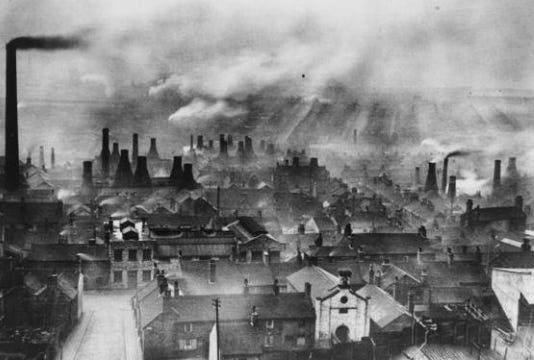
Now, thanks to the Clean Air Act passed in the 1970s, almost all of the bottle kilns have been taken down until only a handful remain today.
Since I was there in the late 1960s the city has continued to face significant de-industrialization with the loss of its steel works and other employers as well as the closure of many of the ‘potbanks’ where the pottery products were manufactured. Now major road-building in an attempt to improve connectivity to the national motorway network has scythed through the city disrupting neighbourhoods and breaking the previous road pattern between the towns and the many streets of redbrick terraced houses. It looked and felt to me as though the heart had been torn out of the city and its proud industrial heritage relegated to the tourist trade. Brownfield sites waiting for development were common. Despite attempts to provide the city with a modern centre and re-vitalize the city landscape, there is clearly still a long way to go.
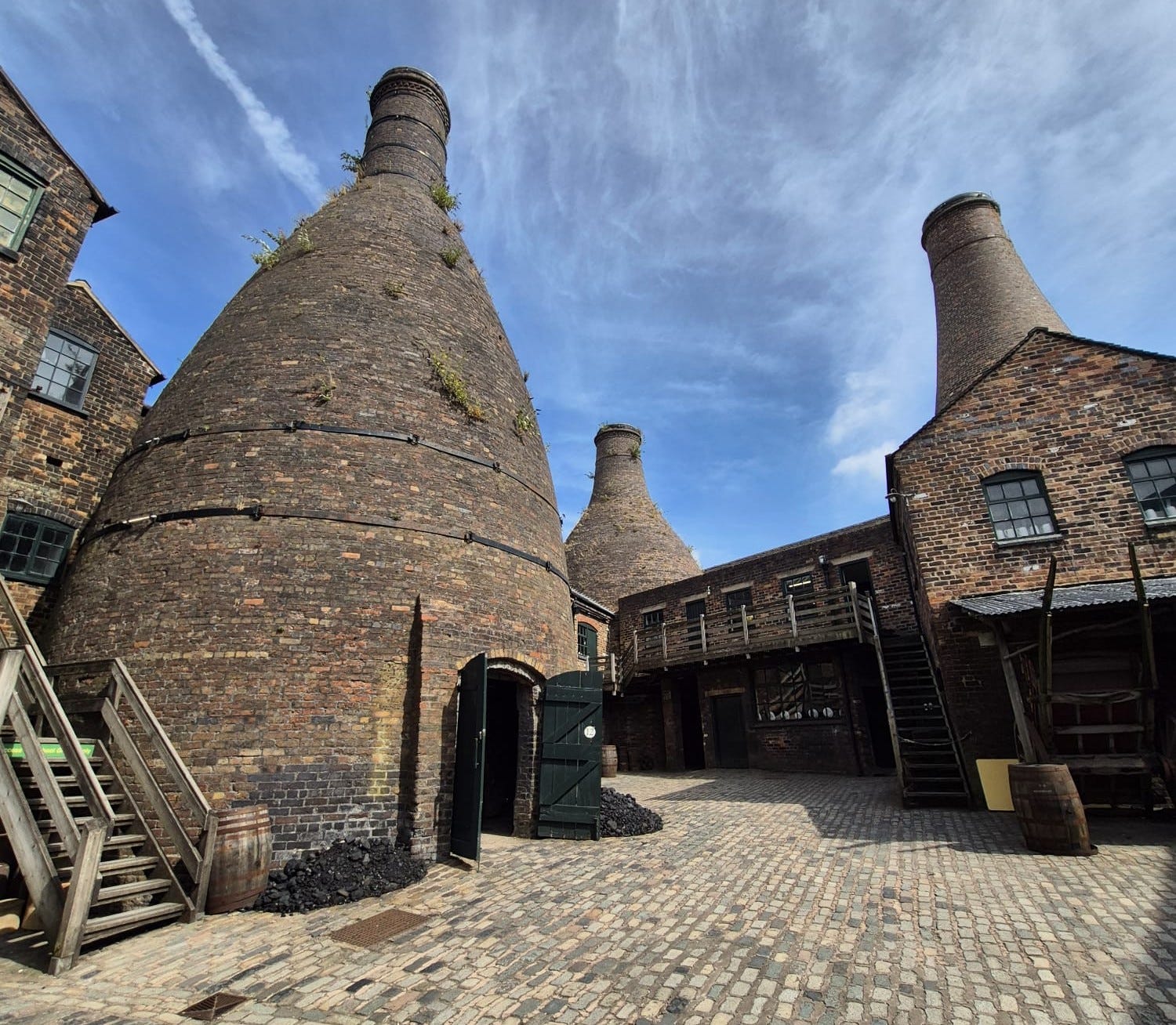
One of the former potbanks is now a fascinating museum, which I was able to visit on my trip. This is the Gladstone Pottery which operated 4 kilns and at one time employed over 70 workers, men, women and children. There has been a pottery on the site since 1784, and it ceased production in 1970. The museum provides a clear insight into the processes involved in transforming clay into high quality decorated pottery. The juxtaposition of the poor working conditions with the high levels of skills of the workforce in producing such highly decorated bone china, made very clear in the museum, is striking.
Keele in town
I have long held an interest in the different ways in which universities relate to the communities in which they are situated. Some are lofty and aloof whilst others are important contributors to their local communities and economies I have published on this, and wrote an early piece on here exploring the importance of learning to place.
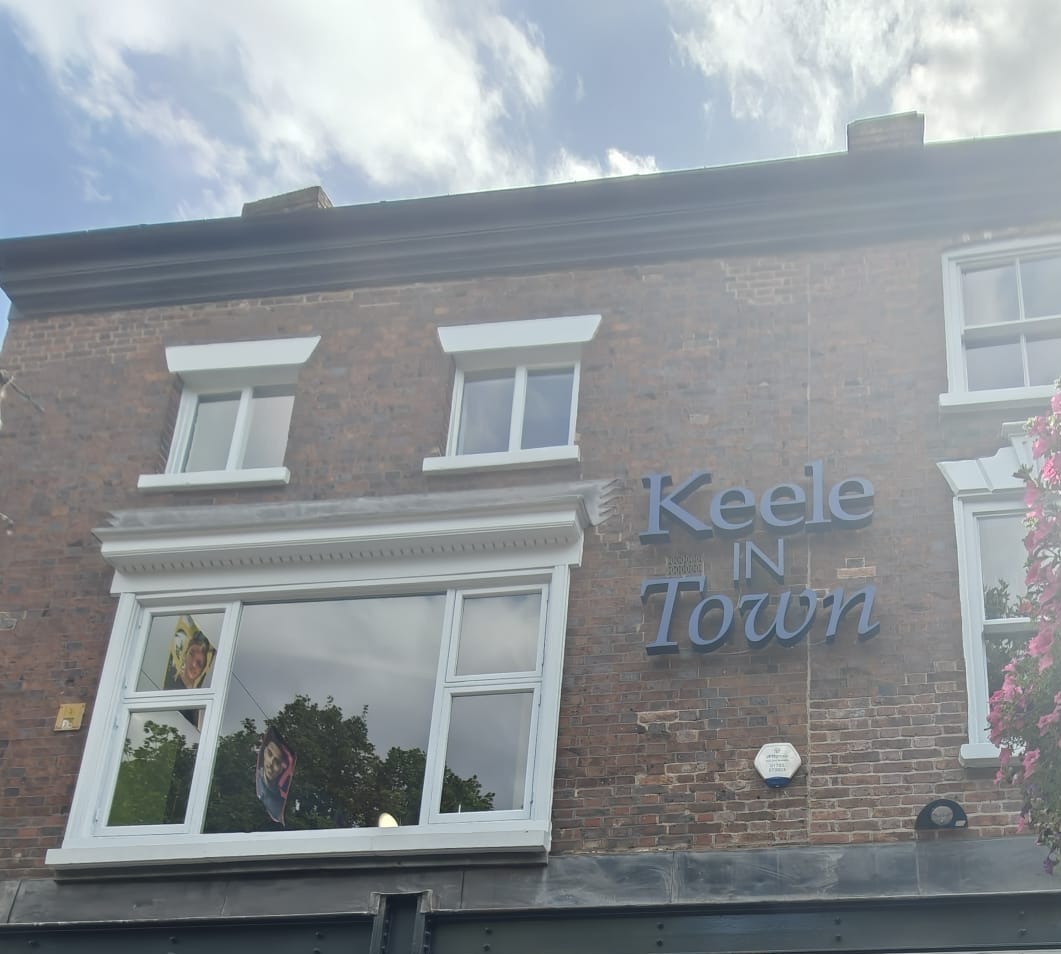
To help bridge the physical and cultural gap between the University and its nearby city, Keele has opened a facility which offers several ways for the community to engage with the University. Located on a main street in Newcastle-under-Lyme and funded through a partnership including the University, the local council and central government, the project is intended as a gateway where residents, community groups and businesses can collaborate with experts from the University and benefit from new learning and support opportunities. The project brings back into use a previously empty 19th century building as a mixed-use venue – a ‘hub of learning’ and a place for people to connect with the University and access advice and support on a range of subjects. It is also a place where businesses and local community groups can meet and showcase their work. It has a welcoming cafe on the street for all to meet and help break any barriers in accessing the University. When I visited it was busy and served a good lunch!
Places revisited
So how do I reflect on this visit to two places important to me some 60 years ago? Was it a good idea to return, however briefly?
In short it was both refreshing and disappointing. Keele was uplifting in that it had greatly expanded and extended its estate in a way which respected and was sympathetic to the environment I recall. The campus has a clear centre with cafes, shops and entertainment venues. The removal of traffic from the centre and the consequent pedestrianization of routes to the teaching buildings and halls of residence has created a very walkable feel, and the wide spaces for informal interaction between students, staff and others on the campus remains. The lawns and the lakes behind Keele Hall remain an important feature. The community ethos I recall still feels very strong even in the face of the economic pressures faced by modern universities. Its values of promoting learning and community remain strong.
Stoke, on the other hand was a disappointment. Deindustrialization has hit the place hard. Despite attempts at regeneration, change has not been sustained. The places I saw looked run down, even broken. The new roads seemed to have split communities rather than helped them connect. My earlier impression of warm red-brick terraced houses and streets mixed in with small-scale enterprises seems disrupted. The city’s identity seemed to have gone with it. The pride in its heritage expressed in its museums felt on the wane in the face of economic change. Flags associated with right-wing political groups were commonplace, in a city I remember as dominated by left-leaning progressive parties.
Keele in Town is a small but intriguing attempt to bring the University to the community. Notwithstanding numerous ways in which the University is partnering with local businesses and local authorities and offering a range of access routes to its resources, there is a long way to go to establish sustainable change in the current economic climate. But the openness and informality of contact through this main street facility was a joy to see.